Hear It Before They Do: A Writer's Guide to the Low-Stakes Table Read
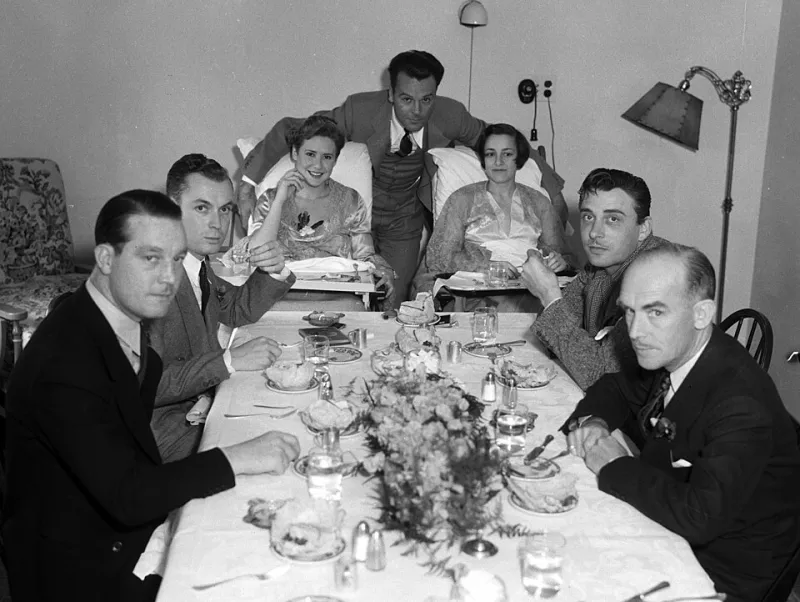
Photo: Los Angeles Times, CC BY 4.0, via Wikimedia Commons
A table read is not a performance. It is a diagnostic. You are not there to hear applause. You are there to hear where the story breaks.
Most scripts do not fail because the writer cannot write a sentence. They fail because the story only works on the page, in the writer's head, at the writer's pace. A table read puts the script in other mouths and other ears. It is the cheapest test you can run before you send your work to producers, agents, or collaborators.
What a Table Read Is Actually For
A table read is a low-budget laboratory. Actors sit around a table with scripts in hand. A narrator reads stage directions. No costumes, no blocking, no lighting. The goal is to hear the material as a listener would, without the distractions of production.
That means you are listening for three things: clarity, stakes, and momentum. Can a stranger follow the story? Do the characters want something badly enough to keep us interested? Does the scene turn? A table read will not tell you if the script is good. It will tell you where it stops working.
Casting for Voices, Not Names
You do not need stars. You need people who can read clearly and take the work seriously. Friends, local actors, theater students, coworkers who are good at cold reading. Cast against type sometimes, but not so far that the read becomes a comedy.
Assign roles in advance. Send the script with enough time to read it. Ask one person to read stage directions and keep them moving. Do not cast yourself in the lead if you can avoid it. You need to listen, not perform.
Set the Room Up to Tell the Truth
The room should be quiet, comfortable, and free of phones. Provide water. Start on time. Read the whole script without stopping, even if something goes wrong. The first pass is for the shape of the experience. If you stop to fix every line, you will never hear the whole story.
Record the audio if everyone agrees. Take notes during the read, but keep them brief. Mark the moments where you got confused, bored, or moved. Do not explain the script before the read. Do not apologize for it. Let it stand on its own.
Separate Performance Problems From Story Problems
After the read, take a breath before you ask for notes. Then ask questions instead of making speeches. Where did you get lost? What did you believe? Which character did you want to hear more from? What felt slow?
Listen for patterns. If three people say the second act drags, it probably drags. If one person wanted a different ending, that is a note about taste, not a mandate. Write down performance problems separately from story problems. A flat line delivery is not the same as a flat scene.
Capture Notes Without Gutting Your Voice
The biggest danger of a table read is overcorrecting. You hear a joke fail and you cut it. You hear a character annoy the room and you soften them. You hear one actor struggle with a monologue and you rewrite it for that actor.
Do not do that in the room. Collect the notes. Wait a day. Then sort them into three piles: clarity, stakes, and momentum. Clarity notes are usually right. Stakes notes are often right. Momentum notes are a conversation. Anything that starts with I would have written it differently goes in a fourth pile, which is the recycling bin.
Run a Second Read Before You Send It
Revise the script, then read it again with a different group if you can. You do not need a full production. You need fresh ears. The second read will tell you whether the fixes worked or just moved the problem.
When you send the script out, you will know what it sounds like. That confidence is not arrogance. It is evidence. You have heard the story in a room. You have watched people lean in and drift away. You have made it better before anyone with a budget had to tell you.
A Table Read Is Not a Test You Pass
It is a test you use. The script is still yours. The voice is still yours. The table read just gives you a room full of listeners before the room gets expensive. Use it early, use it often, and do not let a bad read convince you the script is dead. Sometimes the script is fine. Sometimes the room was just tired.